Materials and Processing at JPL-NASA
- Brandon Lou
- Oct 6, 2025
- 4 min read

Updated: Nov 6, 2025

Before joining JPL, I had the opportunity to intern at HRL Laboratories as a computational materials researcher, a path closely aligned with my background in simulation and defect modeling. However, I ultimately chose NASA’s Jet Propulsion Laboratory (JPL) because I wanted to gain practical, hands on experience in materials characterization and processing in the engineering and industrial side of materials. The tipping point for me joining JPL was following my dream of being a part of the revolutionary work that JPL has done and continues to do in advancing space technology.

Over ten weeks, I gained extensive experience in materials characterization and design for spaceflight qualification. My work spanned from material qualification to material analysis, all under the same guiding principle, ensuring that every material and process could meet the reliability and precision required for space flight missions under the JPL-NASA standards.

One of my primary projects involved qualifying laser marking parameters for flight hardware. The goal was to determine how different laser settings affected common spaceflight materials such as aluminum, stainless steel, and titanium with various anodized coatings. I conducted microstructural analyses on laser marked samples using both optical and scanning electron microscopy (SEM) to detect subsurface damage, heat-affected zones, and coating degradation. To reveal microstructural changes, I carefully cut, mount, and etched samples, comparing the results against ASTM standards. My observations were synthesized into detailed reports and recommendations for revised laser parameters, which were then shared with senior engineers and JPL’s machining division.

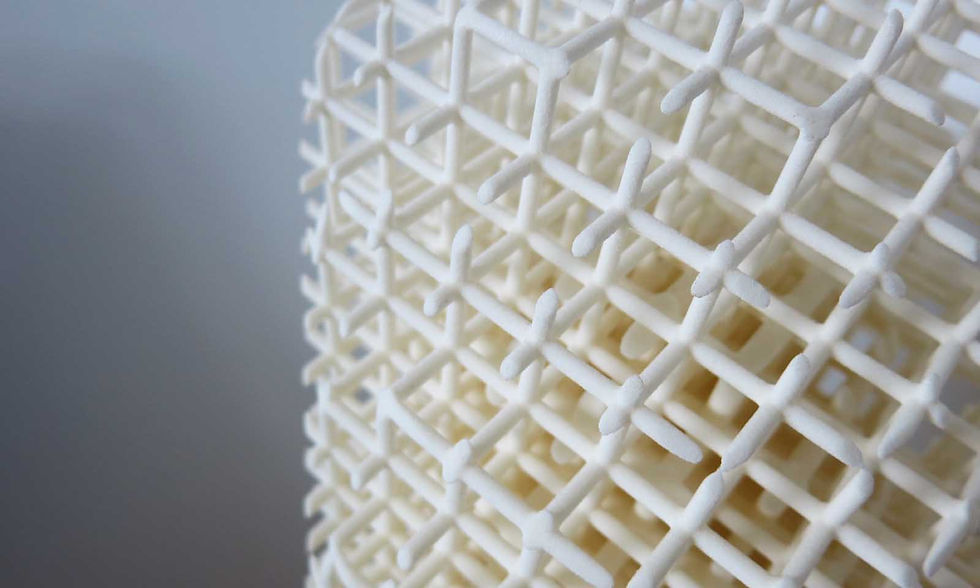
In parallel, I worked on testing and characterizing additively manufactured components made through stereolithography (SLA). I studied how variations in processing parameters and post curing conditions influenced mechanical and chemical performance between different resins for application on the now departed Europa Clipper mission. Particularly with respect to outgassing and mechanical strength to determine and quantify potential material candidates for future use. By analyzing tensile test data I identified surface defects unique to AM parts and demonstrated that post machined AM surfaces significantly improved their mechanical properties. Additionally, I reviewed analytical chemistry results such as thermogravimetric analysis (TGA) and differential scanning calorimetry (DSC) from these samples to determine the chemical outgassing performance and categorize the different resins into suitable applications like structural or sample collection. These findings provided valuable input for future sample collection missions or lightweight 3D printed material alternatives, where material stability and surface integrity are mission critical.
Beyond my primary projects, I took initiative to assist other engineers in the M&P group to broaden my experience and make the most out of my time there. I wanted to learn not only the technical workflows but also the culture, problem solving approaches, and hands on methods that define how the M&P team operates at JPL.

Among the projects I sought out, I conducted tensile tests on aluminum honeycomb structures to evaluate the performance of the adhesive layer bonding the panel to a metal substrate. These tests were designed to ensure structural reliability under flight like conditions and were performed in accordance with ASTM standards. In addition to panel testing, I performed shear tensile tests on adhesive coupons that I prepared based on the JPL-NASA standards to quantify bond strength, fracture behavior, and consistency across batches. Through this work, I learned the importance of strict procedural compliance, fixture alignment, and data repeatability for testing samples between different batches.

I also supported preparing and qualifying coating coupons for spaceflight applications, carefully following JPL-NASA testing standards. Each coating sample underwent a comprehensive series of evaluations, including thickness verification, hardness measurement, scratch resistance testing, and optical property analysis for reflectivity and absorbance. My role involved careful sample preparation, masking, and documentation to ensure traceability throughout the qualification process. I gained hands on experience with the coating process, and learned how subtle changes in coating uniformity or curing conditions could influence thermal control and optical performance in space environments. This project taught me how coating qualification ties directly into spacecraft survivability, where every micron of film thickness must meet mission requirements. Expanding on my involvement on the project, I also had the opportunity to personally deliver them to JPL’s paint shop, where I observed the workflow and techniques used by their team. This allowed me to learn directly from technicians and engineers, strengthening my understanding of how material qualification connects to downstream fabrication processes and improving my ability to communicate across multidisciplinary teams.

One of the most memorable experiences from my time at JPL was shadowing a failure analysis review for a drilling component used on a twin unit of the Perseverance rover. I assisted engineers in using SEM and optical microscopy to examine fracture surfaces and wear features in order to determine the root cause of the component failure. This investigation showed me how interdisciplinary collaboration between materials scientists, mechanical engineers, and mission assurance teams is essential for diagnosing and preventing anomalies in flight hardware.
In parallel with lab work, I participated in design and material review meetings for the Mars Sample Return project including large scale all hands sessions and detailed part reviews that lasted several days. Sitting in those meetings gave me a deeper appreciation for how materials, manufacturing, and mission design are intertwined.
By the end of my internship, I had gained not only technical expertise in advanced material characterization, but also a broader systems level perspective on how materials research supports the success of NASA missions. My time at JPL reinforced my belief that precision in materials science is foundational to exploration. That behind every rover, lander, or spacecraft, there’s a story of careful experimentation, microscopic detail, and the engineers who ensure nothing is left to chance.
TL;DR
Conducted laser marking qualification for space flight material via SEM and optical measurements. I subsequently provided feedback and recommendations for laser parameters.
Investigated processing techniques and material selection for AM stereolithography samples by testing mechanical performance and chemical outgassing.
Analyzed mechanical test data and analytical chemistry tests for changes in material properties in parts.
Assisted the testing and review of space flight materials and parts including welding solidification, failure analysis, and material characterization based on NASA-JPL’s space flight qualification standards.





Comments